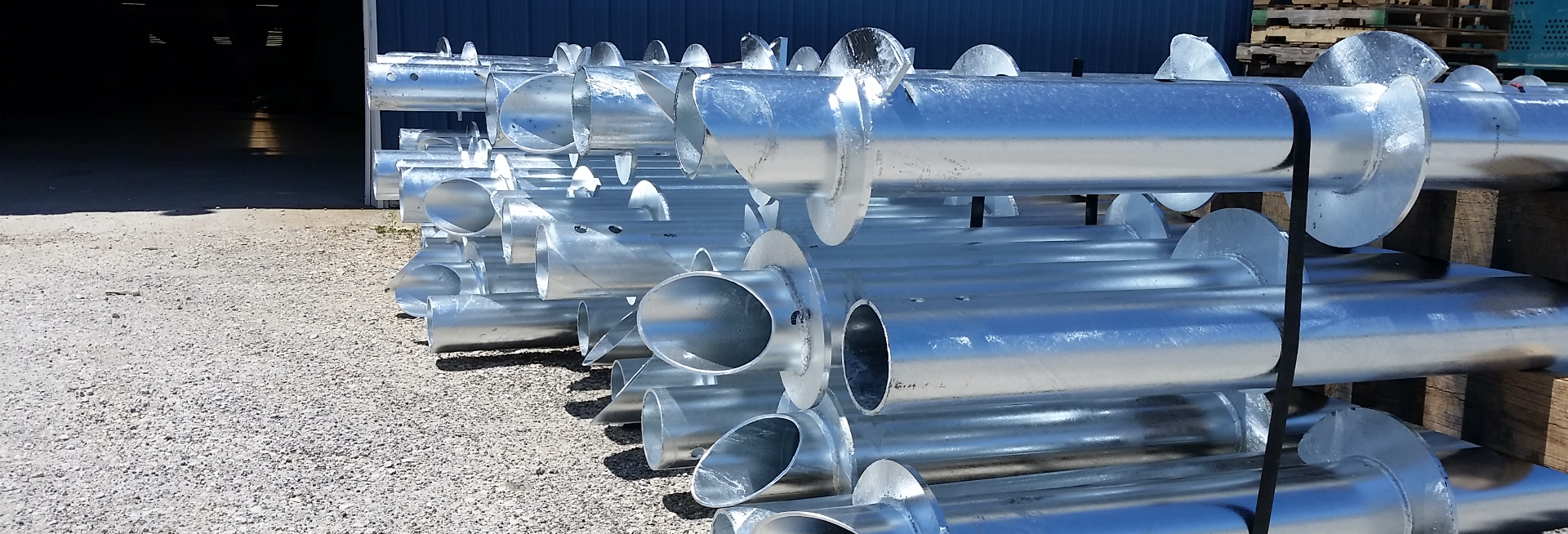
Helical piers are used across a wide range of markets and industries where predictable performance in challenging soil conditions is required. Their adaptability, speed of installation, and minimal site disturbance make them a reliable foundation solution for both new construction and retrofit applications.
Helical piers are commonly used in residential construction and repair projects, including foundation stabilization, underpinning, additions, and homes built on variable or weak soils.
In commercial applications, helical piers support office buildings, retail centers, warehouses, and mixed-use structures where installation speed and load verification are critical.
Industrial facilities utilize helical piers for heavy equipment foundations, process structures, and expansions where reliability, limited vibration, and constructability are key considerations.
Helical piers are used in infrastructure projects such as bridges, sound walls, utilities, and transportation-related structures where long-term performance and limited disruption are required.
In marine environments, helical piers are applied to docks, piers, seawalls, and waterfront structures where resistance to corrosion, uplift, and variable subsurface conditions is essential.
Helical piers provide stable foundations for oil and gas facilities, including equipment supports and temporary or permanent structures installed in remote or variable soil conditions.
Florida presents some of the most demanding foundation conditions in the country, including loose sands, organic soils, high groundwater, and shallow limestone. Helical piers are particularly well-suited for these conditions due to their ability to:
As a Florida-based supplier, Propact systems are routinely used for residential, commercial, marine, and infrastructure projects throughout the state, where soil variability and constructability often govern foundation design.