Propact helical pile systems are designed using established torque correlation methods, verified through field testing and soil-specific evaluation. Final pile selection and embedment depth should always be confirmed based on project conditions, test pile data, and engineering judgment.
Engineering documents provided are for general reference and preliminary design assistance only. Final system selection and design must be completed by the Engineer of Record.
Installation torque is commonly used as a field verification tool for helical pile capacity and provides a practical correlation between applied torque and axial resistance. This relationship is influenced by several factors, including soil conditions, helix geometry, shaft size, and installation method.
Torque correlation values presented in Propact’s general rating sheets are intended for preliminary design and comparison purposes. These values assume typical soil behavior and installation practices and should not be interpreted as absolute capacity without consideration of project-specific conditions.
It is important to recognize that installation torque is a proxy for capacity, not a direct measurement. In certain soil profiles—particularly those involving limestone, dense sands, or mixed stratigraphy—high torque values may be achieved due to cutting resistance or sidewall friction rather than true bearing performance at the helix plates.
For this reason, Propact recommends that:
Final pile capacities and acceptance criteria should always be established by the Engineer of Record based on site-specific soils, loading conditions, and field verification data.
Use the link below to access our product rating sheet for quick-reference data commonly used during early design and specification. This sheet provides typical performance information to support initial system selection.
General-Product-Rating-Sheet-26.pdf
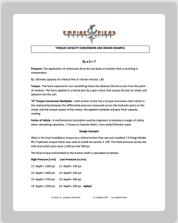
Use this as a reference for calculating torque capacity conversion. This copy also includes a design example you can work through to ensure you are calculating your conversions accurately.
Click here or image below to download
ICC Certification: https://www.icc-es.org/wp-content/uploads/report-directory/ESR-4050.pdf
The two helical products include:
The four bracket products include:
Additional technical documentation is available upon request, including product cut sheets, testing data, installation details, and supporting references. These materials are commonly used to support project-specific evaluation, submittals, and design coordination.
If further information is needed beyond the general rating sheets and design examples provided, please contact us and we will assist in assembling the appropriate documentation for your review.